
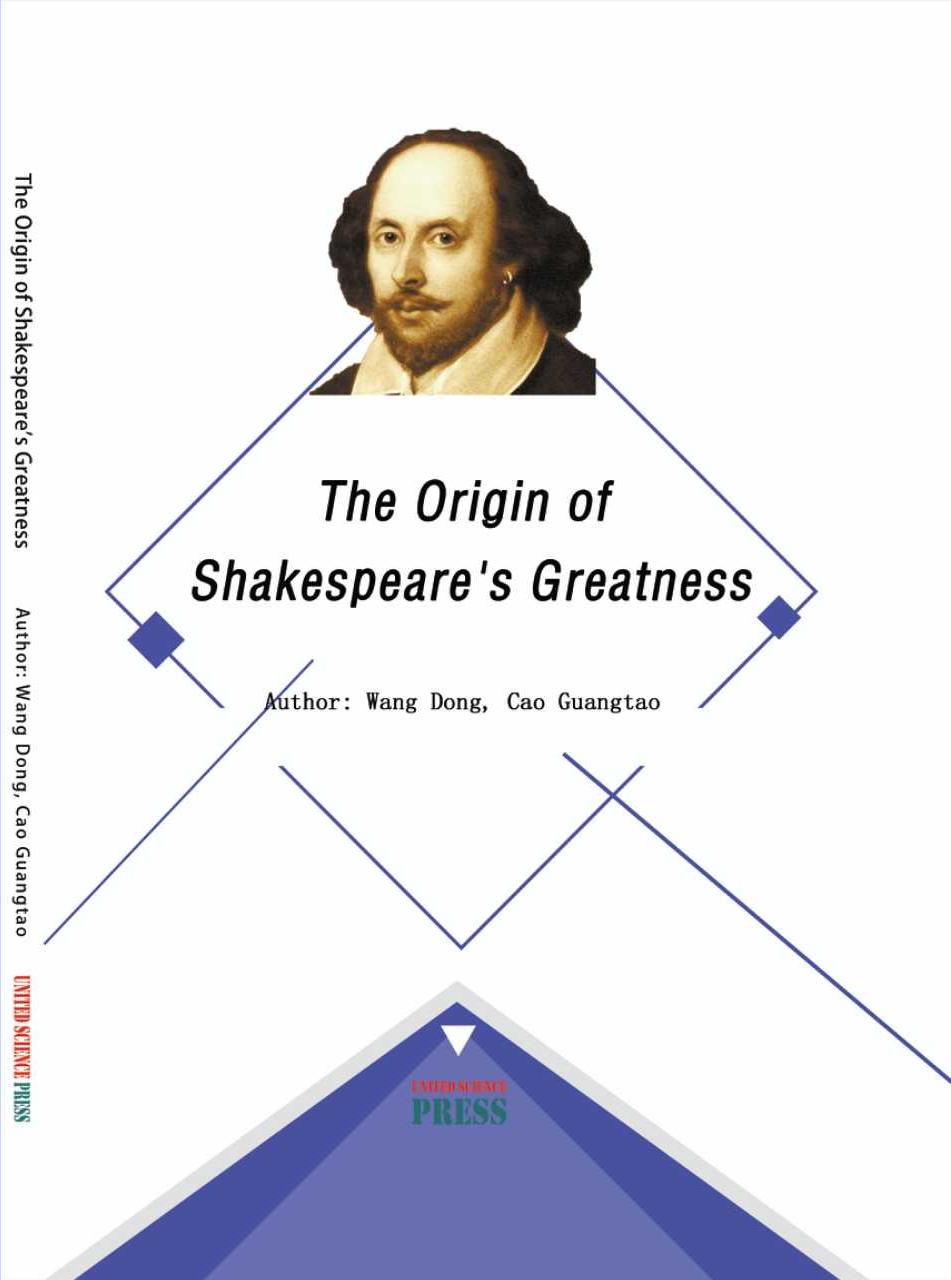
The Origin of Shakespeare's Greatness
内容简介
This book focuses on Shakespeare's dramatic art and its comparative study with Yuan Zaju (especially Guan Hanqing's works). It first explores the core role of religious ethics (mainly Christian ethics) in shaping Shakespeare's characters, driving plots and exploring human nature, as well as his profound insight into human nature, revolutionary breakthroughs in language art and dramatic structure. Then, it compares Shakespeare's plays with Yuan Zaju in terms of dramatic functions, aesthetic pursuits and character portrayal, revealing their similarities in reflecting reality and caring for human nature, as well as their unique features rooted in cultural differences. Adhering to an academic, text-based attitude, the book serves as a bridge between Chinese and Western dramatic cultures, helping readers understand the excellence of both classics and inherit human civilization treasures.
作者简介
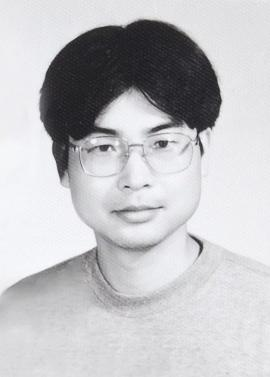
Wang Dong, Cao Guangtao
Wang Dong (1969-04), Master of English Language and Literature, Lecturer of English Department, Foshan University, Foshan, China. In 1991 and 1998, he graduated from School of Foreign Languages, Henan University and was granted Bachelor's Degree and Master's Degree. In June 2019, he was admitted to Assumption University in Thailand as a doctoral student. He is the author of three collections of poetry, The Stars Are Singing (The Earth Culture Press, 2009), More than Love (United Art Press, 2024) and Original Love Poems (Shanghai Literature & Art Publishing House, 2018), English novel, A Fallen Leaf Regaining Life (Walt Whitman Literature Fund, 2009), as well as English monographs, A Study on D. H. Lawrence’s Main Novels and Poetry (Shanghai Jiao Tong University Press, 2024) and Lingnan Culture: Research and Translation (United Art Press, 2025). Till now, more than fifty academic papers of his have been published.
Cao Guangtao (1971-11), Doctor of Ancient Literature, Master's supervisor, Professor of School of International Studies, Guangdong University of Education, Guangzhou, China. In 1990 and 1997, he graduated from School of Foreign Languages, Henan University and was granted Bachelor's Degree and Master's Degree. In 2006 he graduated from Chinese Language and Literature Department, Sun Yat-sen University and was granted Doctor’s Degree. He is mainly engaged in research on English education, literature and cultural studies, and English translation of dramas. He has presided over 2 provincial and ministerial-level social science project, 4 municipal and department-level social science projects. He is the author of 2 academic monographs, more than 10 textbooks, and over 60 academic papers, and has won 4 municipal outstanding achievements awards in philosophy and social sciences.
目录
Preface / iii
Part I The Originality of Shakespeare's Plays / 1
Chapter One: A Thematic Study of Shakespeare's Plays / 2
Chapter Two: The Artistic Techniques in Shakespeare's
Dramas——Taking Richard III as an Example / 30
Chapter Three: The Performance Forms of
Shakespeare's Plays / 36
Part II A Comparative Study of Shakespeare's
and Guan Hanqing's Plays / 51
Chapter Four: A Comparative Study of Ghost Images in
Dramas of Guan Hanqing and Shakespeare / 52
Chapter Five: A Comparative Study of Comic Forms and
Concepts in Guan Hanqing's and Shakespeare's Dramas / 67
Chapter Six: A Comparative Study on the Tragic Forms and
Tragic Conceptions of Guan Hanqing and Shakespeare / 89
Chapter Seven: A Cross-Cultural Comparative Study
on the Ethics of Life and Death in Shakespearean Plays
and Yuan Zaju / 108
Chapter Eight: A Comparison Between Shakespeare's
Romeo and Juliet and Yue Opera Liang Shanbo
and Zhu Yingtai / 136
Chapter Nine: Differences Between Shakespearean and
Chinese Dramatic Art from the Perspective of Culture / 143
Chapter Ten: The Time System and Aesthetics of Traditional
Chinese Opera and Shakespeare's Plays / 153
Part III A Comment on Shakespeare / 170
Chapter Eleven: Correctness on D. H. Lawrence's Comment on Shakespeare / 171
References / 181
前言
As the curtain of the Globe Theatre slowly rose in Elizabethan London, Shakespeare's plays crossed the English Channel, stirring eternal echoes in the long river of time. More than three hundred years earlier, in the theatres and teahouses of Dadu (the capital of the Yuan Dynasty), Yuan Zaju (Yuan dynasty opera) was similarly engraved in the theatrical genes of Chinese civilization. These two theatrical peaks, born on different continents and in vastly different cultural contexts, seem separated by mountains and oceans, yet they form a spiritual resonance transcending time and space in humanity's in-depth exploration of human nature, destiny, and society.
Religious ethics play an extremely important role in Shakespeare's plays. They are the core elements that shape characters' behaviors, drive plot conflicts, and explore the essence of human nature and morality, rather than mere religious preaching—elevating the works to a depth of thought far beyond ordinary dramas. Religious ethics, mainly Christian ethics (such as retribution for good and evil, forgiveness, redemption, and conscience), serve as implicit guidelines for Shakespeare's characters when making choices. For example, in Hamlet, Hamlet hesitates to kill Claudius because he fears that if Claudius is praying when killed, his soul will ascend to heaven; this hesitation stems precisely from his religious and ethical struggle between soul redemption and the justice of revenge. In Macbeth, after murdering the king, Macbeth and his wife are haunted by guilt and remorse, which is a reflection of the Christian concepts that "thou shalt not kill" and original sin, driving the characters toward madness and destruction. In Shakespeare's plays, religious ethics often stand in opposition to secular desires (power, love, revenge), creating intense dramatic tension. In Romeo and Juliet, for instance, although the two protagonists' love transcends family hatred, it is still influenced by Christian marital ethics and views on life and death. Their choice to prove the purity of their love through martyrdom implies a religious yearning for the union of souls. In The Merchant of Venice, Shylock's insistence on the "pound of flesh" contract stands in contrast to the forgiveness and benevolence of Antonio's side; this is essentially a collision between justice and fraternity in religious ethics, deepening the exploration of good and evil in human nature. During the Elizabethan era when Shakespeare lived, Christian ethics still profoundly influenced society after the Reformation. Shakespeare integrated this background into his plays: not only did he reflect the spiritual world of people at that time (such as reverence for God and the afterlife), but also, through propositions related to religious ethics (how to face sin, whether to forgive others), he made his works transcend their era, touch on universal moral dilemmas of humanity, and still resonate with audiences today—forming the extraordinary code of Shakespeare's drama.
The excellence of Shakespeare's plays also lies in his profound insight into human nature and revolutionary breakthroughs in the art of language, allowing these works to evoke deep human resonance across time and space. The characters created by Shakespeare are not just dramatic symbols, but real people full of desires, contradictions, and struggles. Whether it is ambition, love, revenge, or fear, these essential aspects of human nature can be understood in any era and any culture, forming a resonance that transcends time and space. Shakespeare greatly enriched the English vocabulary and revolutionized dramatic structure: he integrated tragic and comic elements, and used monologues to directly reveal characters' inner thoughts, bringing the expressive power of drama to new heights. Shakespeare's plays are not limited to plot; instead, they continuously explore eternal themes such as life and death, justice and evil, love and power—issues that remain at the core of human self-reflection to this day. With his keen sense of the times, Shakespeare wove the depth of history, the complexity of human nature, and the contradictions of reality into the plots of his plays. He not only inherited the theme of fate from ancient Greek tragedies and integrated the educational function of medieval morality plays, but also pioneered a dramatic style that blends realism and romanticism.
In terms of dramatic structure, Shakespeare broke the shackles of the classical unities (unity of time, place, and action) and constructed a grand yet delicate narrative system with an open structure. Character portrayal is another peak in Shakespeare's drama: his concept of round characters endows dramatic figures with true depth of human nature, enabling his plays to transcend the limitations of time and region and become a shared spiritual mirror of humanity. The art of language is the direct source of the immortal charm of Shakespeare's plays. The language in his works possesses both poetic and lifelike qualities—whether it is the refined expression of the elite, the popular art accessible to all, the monologues of the nobility, or the dialogues of ordinary people, all are filled with the texture of life and the power of thought. This inclusiveness of language allows his plays to cross class and cultural boundaries, and be understood and loved by readers and audiences of different eras and backgrounds.
If the analysis of Shakespeare's dramatic art forms the foundation of this book's depth, then the comparative study of his works with Yuan Zaju—especially the plays of Guan Hanqing—constitutes the soul of its breadth. Yuan Zaju represents the first golden age and peak of ancient Chinese drama. Although Yuan Zaju and Shakespeare's plays were born from different cultural soils, they show surprisingly similarities in dramatic functions, aesthetic pursuits, and care for human nature, while also exhibiting uniqueness rooted in cultural differences. This comparison of similarities and differences not only helps us more clearly recognize the excellence of Shakespeare's plays, but also provides a new perspective for understanding the outstanding artistic value of traditional Chinese drama.
In terms of dramatic functions, both Shakespeare's plays and Yuan Zaju undertake the mission of reflecting reality and criticizing society—serving as mirrors and consciences of their times. Both touch on the core contradictions of society through dramatic conflicts, realizing the function of conveying moral principles through art. This concern for reality is the key to their ability to transcend eras. Neither Shakespeare nor Guan Hanqing shied away from the darkness of society or the ugliness of human nature; instead, they used drama as a weapon to arouse people's pursuit of justice, conscience, and humanity. This spirit of engaging with reality is a common trait of all great works of art. In terms of aesthetic pursuits, both Shakespeare's plays and Yuan Zaju emphasize the twists and turns of the plot and the authenticity of emotions, but due to differences in cultural backgrounds, they present different aesthetic styles. The analysis of these differences in this book does not stay on the surface, but delves into the cultural roots, pointing out that such differences are not a matter of superiority or inferiority, but rather reflections of different cultural perspectives on "human ways of existence". It is precisely these differences that allow the two to jointly form a diverse landscape of human dramatic art.
The comparison of character portrayal is also one of the most insightful parts of this book. Shakespeare's characters are inward-looking explorers, while Guan Hanqing's characters are outward-acting doers. The former allows us to see the depth of human nature, and the latter lets us feel the warmth of human nature—together, they form two major paradigms in the art of human character portrayal. When we revisit Shakespeare's plays and Yuan Zaju today in the 21st century, we find that these works still hold strong practical significance. Hamlet's questioning of human nature remains a spiritual guide for us when facing the dilemmas of modern society; Dou E's longing for justice is still the value we pursue in building a fair society. Through academic means, this book enables us to draw wisdom and strength from human civilization in the cross-temporal dialogue of drama.
This book adheres to an academic attitude based on texts and guided by questions. Whether in the analysis of Shakespeare's dramatic art or the comparison with Yuan Zaju, all discussions are built on the detailed interpretation of original texts, avoiding vague theoretical empty talk. This book is not only a monograph of academic research, but also a bridge connecting Chinese and Western dramatic cultures. In the context of globalization, cultural exchange and mutual learning have become the theme of the times. As an important carrier of human culture, the comparative study of drama holds significant practical importance. Through the comparison of Shakespeare's plays and Yuan Zaju, this work not only helps us gain a deeper understanding of Western dramatic classics, but also allows us to rediscover the value of traditional Chinese drama. Both Shakespeare's plays and Yuan Zaju are shared treasures of human civilization, worthy of our treasure, research, and inheritance.
With more than a decade of painstaking effort and sincere dedication, the two authors have meticulously completed this book. They have integrated the in-depth analysis of Shakespeare's dramatic art with the classic interpretation of Yuan Zaju, demonstrating a broad vision that breaks down the barriers between Chinese and Western drama. From a comparative perspective, the book reveals the common laws and unique charm of human dramatic art. This preface is hereby written in the hope that more readers will feel the charm of dramatic art through this book, rediscover classics from a comparative perspective, and gain inspiration for the future.
免费获取出版方案
如果您有出版需求,我们将为您提供专业的出版咨询和方案策划
我们承诺对您的信息严格保密
相关推荐
黎明前的心事
Wang Dong, Cao Guangtao 著
¥ 79
Lingnan Culture: Research and
Wang Dong, Cao Guangtao 著
¥ 50
园林景观工程中土木水利技术应用与实践
Wang Dong, Cao Guangtao 著
¥ 56

高等职业教育发展战略与产教融合共同体高质量发展路径研究
Wang Dong, Cao Guangtao 著
¥ 45
出版流程
提交选题
作者提交选题申请表及样章
选题评审
专家评审选题的学术价值和市场前景
签订合同
双方签订出版合同,明确权利义务
编辑加工
专业编辑进行内容编辑和校对
排版设计
专业设计师进行版式和封面设计
出版发行
完成书号申请、印刷和发行工作
读者评论
基于 128 条评价
最新评论
王小明
这本书对房地产金融的理论和实践进行了系统的阐述,内容丰富,案例详实,对我的工作帮助很大。尤其是REITs部分的内容,讲解深入浅出,非常实用。强烈推荐给从事房地产投资和金融领域的人士阅读。
李小华
作为一名房地产行业的从业者,我认为这本书是近年来关于房地产金融与投资方面最全面、最深入的著作之一。书中不仅有理论分析,还有大量的实际案例,对我们的工作具有很强的指导意义。唯一的遗憾是,书中关于国际市场的内容可以再丰富一些。
张教授
我是一名大学教师,这本书已经被我选为房地产金融课程的参考教材。书中内容深入浅出,结构清晰,非常适合教学使用。学生们反映,通过阅读这本书,他们对房地产金融和投资有了更深入的理解。希望作者能够继续更新,加入更多最新的市场动态和案例。
订阅新书提醒
第一时间获取房地产金融领域最新出版信息和优惠活动